

Newspapers in the Northeast of England have recently reported a fire at a local hospital resulting in serious burns to a patient.
It appears that the patient was (against hospital rules) vaping in bed, the vaping device overheated and ignited. As the patient was receiving oxygen at the time, the fire intensified causing fire spread to the oxygen tubing melt.
Although this is a rare example, reports of fire caused by vaping devices are increasing and therefore should not be overlooked as part of the fire risk assessment process.
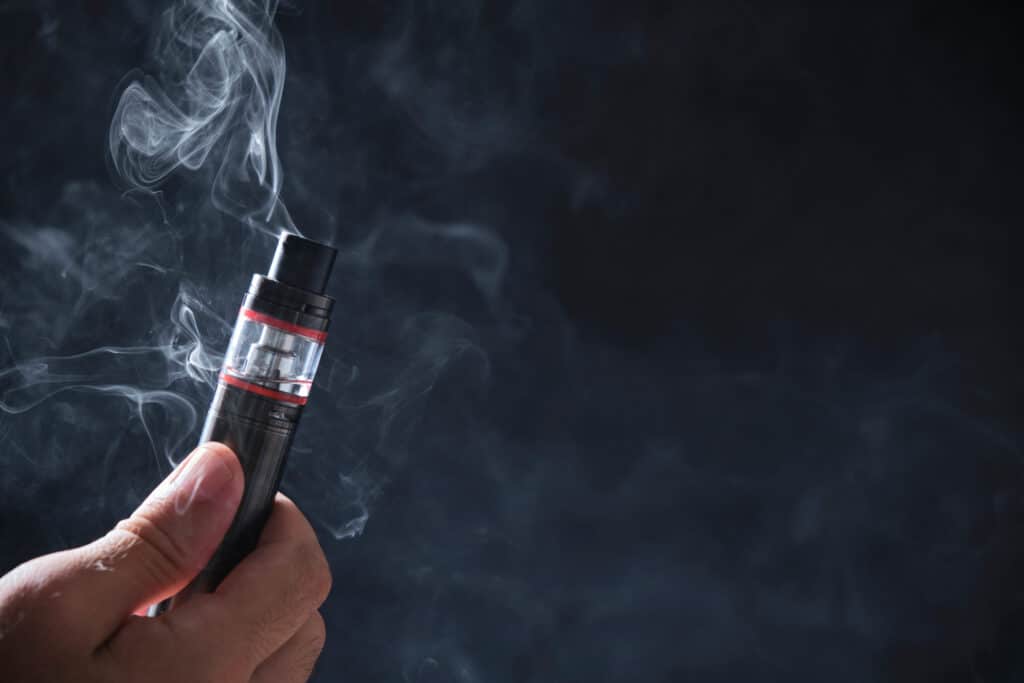
The primary risks appear to be as the result of devices Overheating and Exploding. Vaping devices contain Lithium batteries which can overheat and explode causing ignition and fire spread, this is a greater concern if the design and make of the device is of poor quality (not carrying a CE/UKCA mark of conformity). Overheating can occur at any time; during use, when stored and most likely, when incorrectly disposed of. Overcharging or using incompatible and unregulated chargers can also cause batteries to overheat and explode.
In addition to the risk of fire, vapes used inside can activate smoke detectors causing false alarms and unnecessary evacuations.
Suggested Control Measures
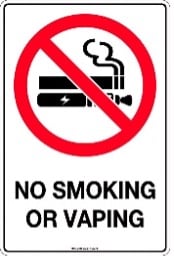
- Apply local safety rules to ban the use of vaping devices in the same way that smoking is prohibited by law.
- Require all chargers to undergo an electrical portable appliance test (PAT) before being used in the workplace.
- Prohibit the use of devices or chargers which are defective, or which do not carry a CE/UKCA mark of conformity.
- Prohibit vaping and charging near flammable gases and liquids or close to easily combustible materials.
- Do not allow vaping devices to be stored in the workplace.
Do not allow vaping devices and chargers to be disposed of into the general waste. Require users to dispose of devices safely elsewhere or provide suitable (steel) disposal bins. Disposal from the workplace should be via a licensed contractor as hazardous waste.